Show the height difference
Send photos from low angles and note where water flows, which edge is high or low, whether the panel rocks, and whether the movement changes by season.
Call (601) 843-6931 or use the homepage contact form.
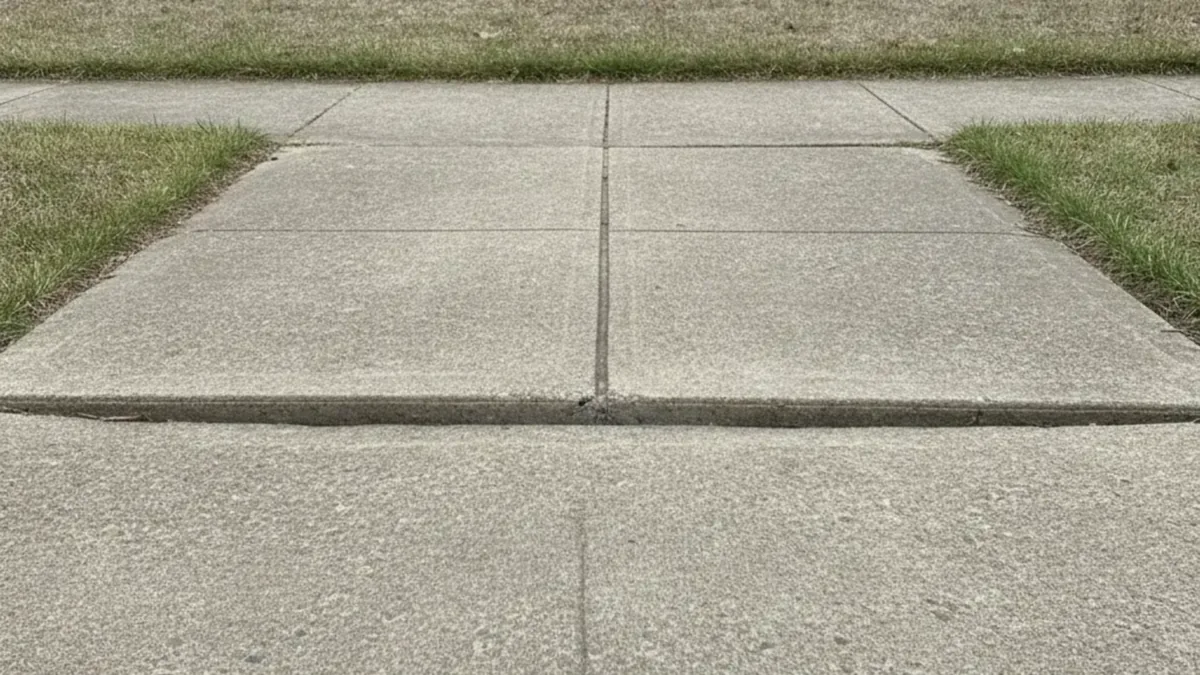
A settled slab is not always a failed slab. When a driveway panel, patio edge, or walkway section remains mostly intact but has dropped, concrete leveling may restore usable elevation without full demolition. The decision depends on the concrete, the void, drainage, access, and whether the soil movement is still active.
Pearl and the Jackson metro sit in a region where Yazoo clay and other expansive soils can change volume through wet and dry cycles. Foam lifting can fill voids and raise suitable concrete, but it cannot make unstable soil stop moving. A useful estimate explains both the opportunity and that limit.
Leveling fits best when the slab itself is strong enough to keep, the affected panels can move as units, and the target elevation is clear. Common candidates include a walkway panel that creates a trip edge, a patio section that sends water the wrong direction, or a driveway panel that has settled at a joint.
Cracks do not automatically disqualify a slab, but widespread fragmentation can. A panel broken into many small moving pieces may not lift evenly. Severe heaving, failed concrete, major root conflict, or a base that continues to wash out can make replacement or drainage correction more practical.
Small access holes are drilled through the slab at planned locations. Expanding material is introduced beneath the concrete to fill voids and apply controlled lift. The work proceeds gradually while elevations are checked. The holes are then patched, and the return-to-use instructions depend on the selected material and site.
The goal is improvement to practical elevation, not a promise of perfect alignment everywhere. Slabs can bind at joints, edges, steps, or buried obstructions. Existing cracks may remain visible, and weathered concrete will not look new simply because it has been raised.
If water caused erosion or loss of support, lifting without changing the drainage path can allow the same condition to return. Downspout discharge, low edges, leaking irrigation, roof runoff, and water moving along a slab should be reviewed before the work is treated as complete.
Expansive clay adds another variable. The ground may shrink during a dry period and swell later. Leveling can restore elevation at the time of work, but no responsible proposal should claim that it permanently controls all future soil movement. Ask what observations support the recommendation and what maintenance or drainage changes are needed.
Keep the slab when it is structurally usable and the main problem is elevation. Replace a section when the concrete is badly deteriorated, too fragmented to lift as a unit, blocked by roots or structures, or shaped in a way that prevents a practical lift. Sometimes the best scope combines methods, such as lifting stable panels and replacing one failed piece.
Compare access holes, patch appearance, elevation tolerance, crack expectations, drainage, cleanup, return-to-use timing, and future movement limits in writing. That gives the homeowner a more useful basis than comparing a lifting price with a replacement price that solves a different problem.
Send photos from low angles and note where water flows, which edge is high or low, whether the panel rocks, and whether the movement changes by season.
The review considers panel integrity, cracks, roots, void access, drainage, surrounding elevations, and whether lifting can meet a practical target.
The written scope should identify injection areas, expected patching, elevation goals, drainage changes, return-to-use timing, and recurrence risks.
Call (601) 843-6931, or use the quote form if you want to start with an address, photos, and project details.
Yes, when the panels remain strong enough to lift, the void is accessible, and the target elevation is practical. Broken or severely deteriorated slabs may need section replacement instead.
No. Leveling can fill voids and raise suitable concrete, but it cannot stop expansive soil from changing volume. Drainage and future soil movement remain part of the risk.
The holes are patched, but patches can remain visible against weathered concrete. Ask about planned locations, size, and expected appearance.
It may improve slope when settlement caused the drainage problem and the slab can be lifted to a suitable elevation. The surrounding grades and runoff path still need review.
Replacement is often better when concrete is badly fragmented, deteriorated through its depth, obstructed by roots, actively heaving, or unable to move as stable panels.
Concrete repair | Concrete resurfacing | Driveway replacement | Richland concrete