Explain how the garage is used
List daily vehicles, workshop use, storage, lawn equipment, moisture history, existing paint or coating, and the cleaning routine you want.
Call (601) 843-6931 or use the homepage contact form.
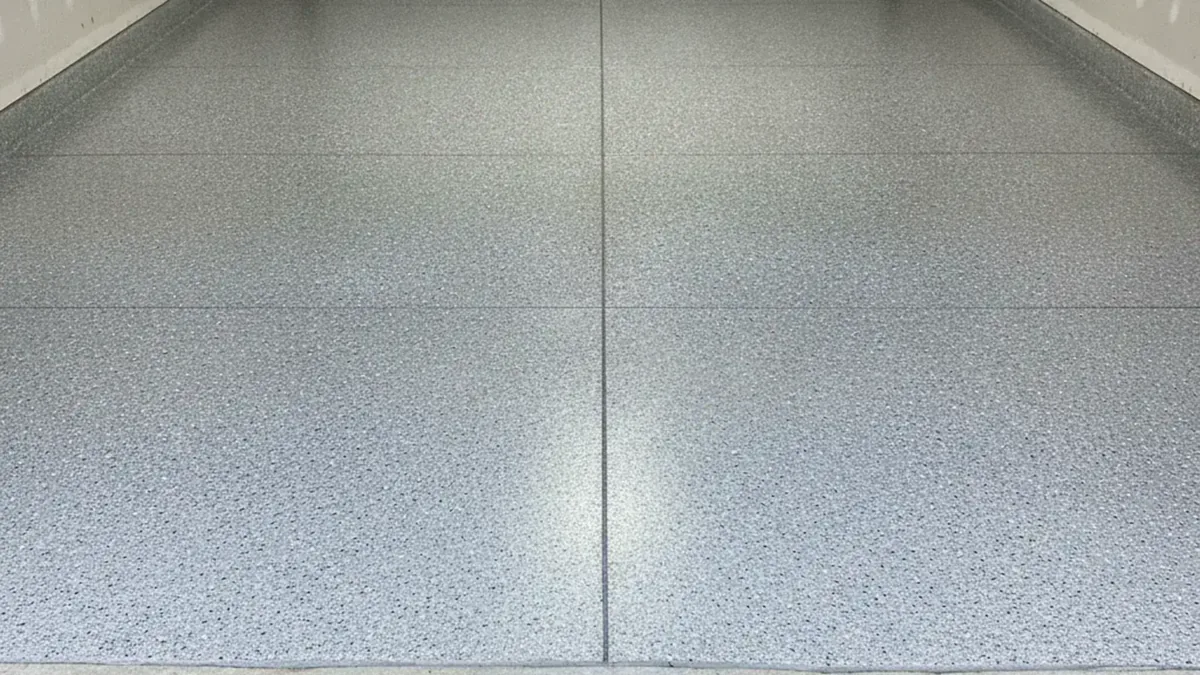
A garage-floor coating has to work after the photos are taken. In Pearl that means handling warm tires, wet vehicles, grit, lawn equipment, stored items, cleaning, and humid-weather cure conditions without becoming unnecessarily slick or difficult to maintain. Start with how the garage is used, then choose the surface system.
This page is about the finished garage. The epoxy-flooring page goes deeper on resin layers, bond, moisture tolerance, grinding, primer, and build coats. A garage coating may use epoxy as part of the system, but the homeowner decision here is performance in the room: traction, appearance, maintenance, downtime, and how the threshold meets outside conditions.
A parking garage needs resistance to tire traffic and the grit carried in during rain. A workshop may need more texture, chemical resistance, and a color that makes dropped hardware easier to find. A storage-heavy garage needs a realistic move-out and cure plan so boxes and shelving do not return before the surface is ready.
Tell the estimator whether the space holds daily vehicles, motorcycles, lawn equipment, freezers, workbenches, or home-gym equipment. Those details guide texture, color, topcoat, edge treatment, and return-to-service planning more effectively than choosing from a flake sample alone.
Tires heat during driving and can stress a finish with weak adhesion when a vehicle parks. The answer is not a marketing claim about being tire-proof. It is a properly prepared slab, a compatible layered system, correct cure, and realistic instructions before vehicles return.
Texture is a tradeoff. More texture can improve wet traction but can also hold dirt and make sweeping harder. A smoother finish cleans more easily but may feel slick when wet. The proposal should connect the selected texture to vehicle use, entry weather, and how the homeowner expects to clean the floor.
Garage concrete can carry oil, tire products, old paint, curing compounds, and moisture vapor. Mechanical preparation and cleaning are needed to expose sound concrete. If contamination has penetrated deeply, the quote should explain the risk rather than hiding it under an unconditional adhesion promise.
Yazoo clay and other expansive local soils can contribute to slab movement. A decorative coating cannot stop an active structural crack. Existing cracks and joints should be reviewed, treated according to their condition, and explained as potential future movement points before the surface system is chosen.
Ask how the garage door threshold, stem walls, steps, and any floor drains will be handled. These details are visible every day and often separate a complete scope from a quick roll-on application.
List daily vehicles, workshop use, storage, lawn equipment, moisture history, existing paint or coating, and the cleaning routine you want.
Compare color, flake blend, texture, traction, cleanability, threshold details, sunlight exposure, and likely future crack visibility.
Confirm when belongings move out, when foot traffic can return, and when vehicles or heavy storage can come back under the selected product instructions.
Call (601) 843-6931, or use the quote form if you want to start with an address, photos, and project details.
The best fit depends on slab moisture, contamination, vehicle use, sunlight, texture, cleaning expectations, and available cure time. Ask for the complete layered system rather than choosing by color alone.
Poor preparation, incompatible layers, contamination, or early vehicle return can contribute to failure. Mechanical preparation, system compatibility, and full cure are the practical controls.
More texture can improve traction but may hold dirt. The right balance depends on wet use, workshop needs, and whether the floor is swept, vacuumed, or washed.
It can make treated cracks less visually prominent, but it cannot guarantee that active movement will not reappear. Yazoo clay-related movement and other substrate changes can telegraph through.
Garage-floor coating starts with finished-room performance such as tire traffic, traction, cleaning, storage, and downtime. Epoxy flooring starts with resin chemistry, preparation, layer build, bond, and moisture tolerance.
Epoxy flooring systems | Concrete resurfacing | Concrete repair | Flowood concrete