Describe the surface and movement
Share the slab location, age if known, cracks, height differences, prior coatings, stains, drainage, and whether any sections rock or change seasonally.
Call (601) 843-6931 or use the homepage contact form.
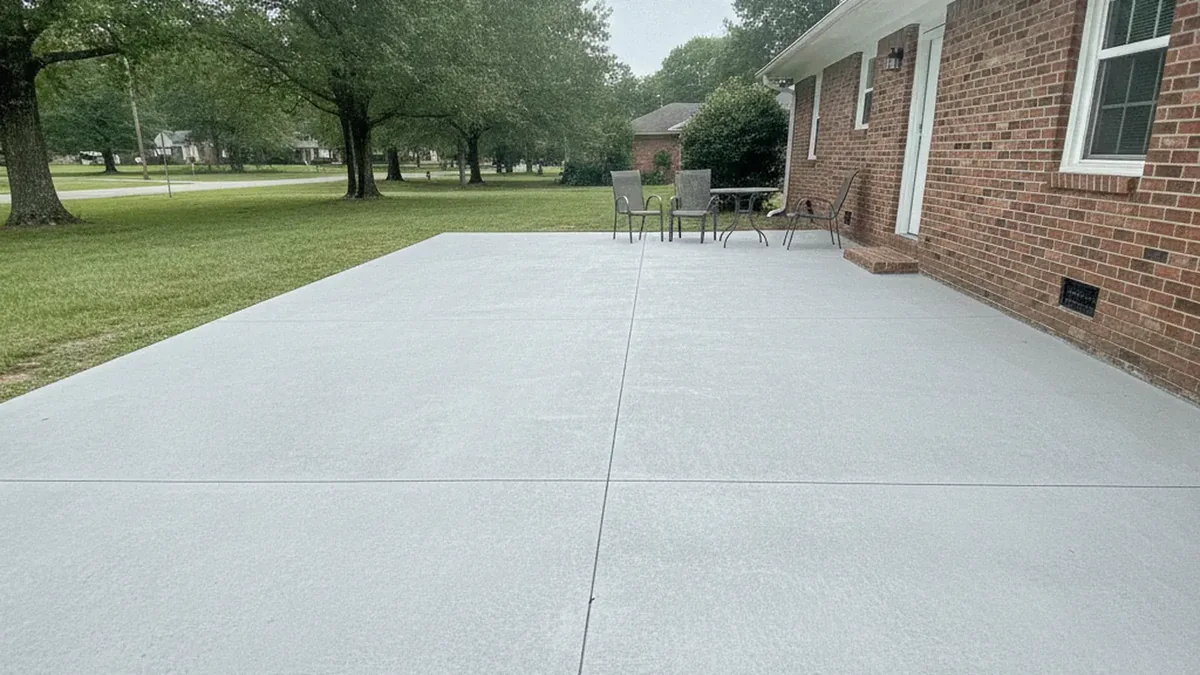
Concrete resurfacing renews the top of a slab. It can improve a stable patio, walkway, or other surface that is worn, lightly scaled, stained, or cosmetically uneven. It does not rebuild the base, stop active settlement, or turn fragmented concrete into one stable slab.
That distinction matters around Pearl. Yazoo clay and other expansive soils can move slabs through wet and dry cycles. If the base is still changing, an overlay may crack where the slab below cracks or separate where moisture and movement are not controlled. The honest first question is whether the concrete is stable enough to resurface.
A good candidate has sound concrete below the worn surface, manageable cracks, stable elevations, and drainage that does not keep water trapped at edges or against the house. Surface scaling, old stains after proper preparation, patchy appearance, and a desire for a new texture can all support resurfacing when the substrate remains suitable.
The estimator should sound the slab, inspect cracks and joints, look for movement or hollow areas, review previous coatings, and identify contamination. Existing sealer, oil, paint, and weak surface paste must be removed or accounted for. Bond depends on preparation, not on how thickly the new finish is spread.
A slab with vertical crack displacement, rocking sections, continuing settlement, widespread spalling, or deep deterioration is a poor overlay candidate. Resurfacing can make it look better briefly while movement from the Yazoo clay-influenced base continues below. The new surface then reflects the old crack or loses bond near the moving area.
That does not mean every cracked slab must be replaced. Stable cracks can be treated, joints can be carried through, and isolated failed sections can sometimes be replaced before the surrounding slab is resurfaced. The proposal should explain why the remaining concrete is considered sound.
Mechanical preparation removes weak material and opens the surface for bond. Repairs are completed before the overlay, and joints are handled deliberately rather than buried without explanation. The installation plan should account for shade, air temperature, slab temperature, wind, humidity, and rain exposure during placement and cure.
Finish choices include simple textured surfaces and decorative treatments, but appearance should follow use. A frequently wet patio or pool-area surface needs traction. A walkway needs a texture that remains practical to clean. Color samples should be viewed as guides because site conditions and cure can affect the final appearance.
Resurfacing uses a cement-based or compatible overlay to renew a stable concrete surface. A resin floor coating is selected around a different layer build, bond, moisture tolerance, and intended environment. Replacement removes the old slab so support, grade, thickness, and joints can be rebuilt.
Choose by failure mode. If the main issue is a worn but stable surface, resurfacing may fit. If the desired result is a garage resin system, compare epoxy and coating options. If soil movement, failed base, or deep deterioration controls the problem, replacement is usually the more honest discussion.
Share the slab location, age if known, cracks, height differences, prior coatings, stains, drainage, and whether any sections rock or change seasonally.
The review should separate stable cosmetic wear from active settlement, contamination, moisture, hollow areas, or concrete too weak to receive an overlay.
Confirm preparation, repairs, joints, product, texture, color expectations, weather window, cure, maintenance, and the possibility of future crack reflection.
Call (601) 843-6931, or use the quote form if you want to start with an address, photos, and project details.
Some stable cracks can be treated before resurfacing, but active movement or vertical displacement can reflect through the overlay. The slab condition should be assessed first.
No. Resurfacing changes the surface, not the slab elevation or support. A settled but intact patio may need leveling; a failed slab may need section replacement.
If expansive soil contributes to movement below the slab, an overlay can crack or lose bond as the substrate moves. Resurfacing is most suitable when the slab is stable.
No. Resurfacing usually renews a stable concrete surface with an overlay. Epoxy flooring uses a resin system with different preparation, moisture limits, layers, and use cases.
Ask for substrate assessment, mechanical preparation, repairs, joint handling, product and thickness, texture, weather limits, curing, maintenance, and movement-related exclusions.
Concrete repair | Concrete leveling | Epoxy flooring | Garage-floor coating