Describe the damage
Share the slab type, location, crack pattern, height difference, drainage issues, and whether a previous repair reopened. Photos help with the first conversation.
Call (601) 843-6931 or use the homepage contact form.
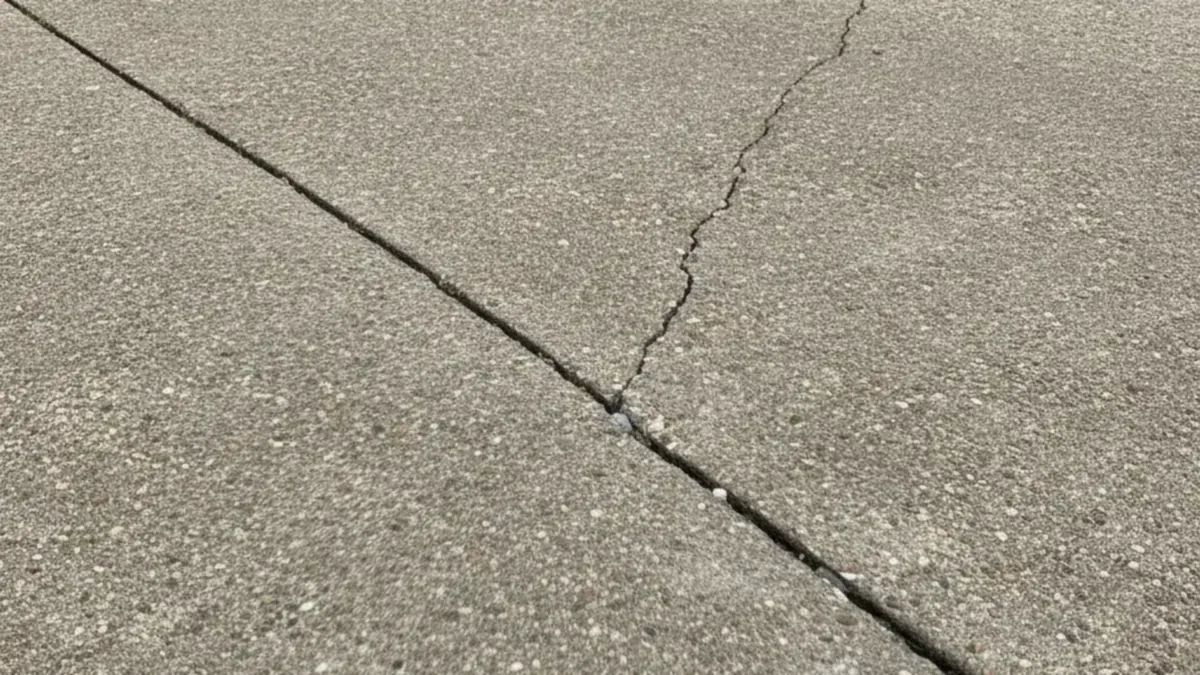
A crack is a symptom, not a diagnosis. Some Pearl slabs have one stable damaged section that can be repaired. Others keep moving because moisture, roots, drainage, or weak material below the concrete has changed the support. The useful first step is to identify which condition you have before paying for a patch that may reopen.
Yazoo clay and other expansive clay soils around the Jackson metro shrink as they dry and swell as they take on moisture. That movement does not make every cracked slab a replacement job, but it does make base stability and drainage part of any honest repair conversation. Call Pearl Concrete to discuss the location, visible movement, and what a repair scope should include.
Repair is most practical when the damage is limited and the surrounding slab is still stable. A chipped edge, worn joint, shallow surface scaling, or one broken panel can often be addressed without removing an entire driveway or patio. The estimate should separate cosmetic damage from structural movement and explain what the proposed repair can and cannot correct.
Crack width alone does not settle the decision. A narrow crack with one side higher than the other may point to movement below the slab, while a wider dormant crack can sometimes be cleaned and sealed to reduce water entry. Look at elevation, recurrence, nearby drainage, roots, and whether doors, steps, or adjoining slabs have shifted too.
Widespread cracking, repeated settlement, rocking panels, and cracks that reopen after prior repair suggest the problem is not limited to the surface. Water can move fines out from under the slab, Yazoo clay can change volume through wet and dry cycles, and roots can lift or leave voids. In those cases, another surface treatment may hide the line while leaving the cause untouched.
That does not automatically mean full replacement. Section replacement, drainage correction, or leveling may fit when the affected area can be isolated. Full removal becomes more reasonable when many panels are moving, the base cannot be corrected from the edges, or the surface has deteriorated across most of the slab.
Start with the slab type, age if known, location, drainage direction, and movement history. Photos taken from low angles help show elevation changes. The site review checks whether water collects beside the slab, downspouts discharge nearby, tree roots cross the area, or adjacent panels have separated. Those observations guide the repair-versus-replace recommendation.
A useful written scope names the damaged area, preparation, material, edge treatment, expected color difference, curing or return-to-use instructions, and any limits. New repair material beside weathered concrete rarely disappears completely. The goal is a sound, well-explained repair, not a promise that an old slab will look newly poured.
These options solve different problems. A coating or overlay cannot stabilize moving concrete. Crack filler cannot raise a settled panel. Leveling cannot restore badly disintegrated concrete. The estimate should identify the problem first, then match the method to it.
Share the slab type, location, crack pattern, height difference, drainage issues, and whether a previous repair reopened. Photos help with the first conversation.
The next step is to separate a targeted repair from leveling, resurfacing, section replacement, or full replacement based on the visible condition.
Before scheduling, confirm preparation, materials, limits, appearance expectations, curing, access, and anything that could change after damaged concrete is opened.
Call (601) 843-6931, or use the quote form if you want to start with an address, photos, and project details.
Yes, when damage is isolated, neighboring panels remain stable, and the base is not continuing to move. Widespread settlement, rocking sections, or repairs that repeatedly reopen can point to a larger base problem.
Yazoo clay and other expansive soils can shrink and swell as moisture changes. That movement can contribute to loss of support, heaving, and cracking, especially where drainage or base preparation is weak.
Usually not perfectly. New repair material beside weathered concrete can differ in color and texture. The scope should explain the likely transition before work begins.
Repair addresses cracks, joints, edges, or damaged sections. Leveling raises a settled slab when the concrete is otherwise sound enough to keep.
Send the Pearl-area property location, slab type, photos from several angles, approximate damaged area, height difference if visible, and whether water or roots are involved.
Concrete leveling | Concrete resurfacing | Driveway replacement | Jackson concrete